
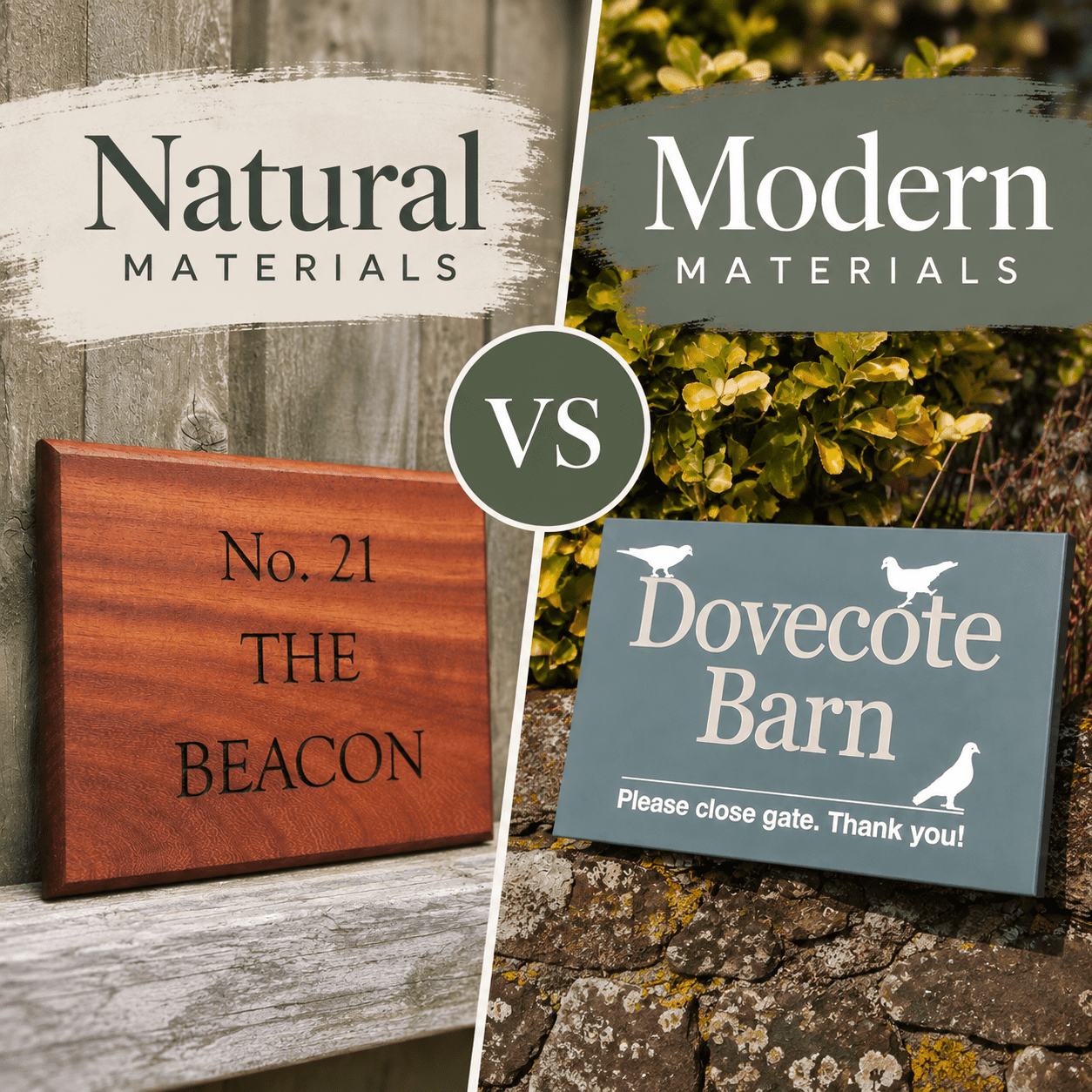
When choosing a new house sign, memorial plaque or business sign, one of the biggest decisions is the material.
Do you choose the natural character of slate, granite or timber? Or would a modern man-made material such as Corian, acrylic, PaperStone or Aluminium Composite be better suited to what you have in mind?
There isn't necessarily a right or wrong answer. Natural and man-made materials each have their own advantages, and the best choice depends on the look you want, where your sign will be positioned, the amount of maintenance you're happy to carry out and the design itself.
Here we take a closer look at both.
What Do We Mean by Natural Materials?
Natural materials are exactly that – materials created by nature rather than manufactured to achieve a particular appearance.
For signs and plaques, some of our most popular natural materials include:
- Slate
- Granite
- Limestone
- Oak
- Iroko
One of the biggest attractions of natural materials is their individuality. No two pieces of stone or timber will ever be completely identical.
The grain in a piece of oak, the markings within granite or the texture of natural slate are all part of the material itself. This means your finished sign has its own character before we even begin adding the design.
The Beauty of Natural Stone
Natural stone has been used for signs and memorials for generations, and it isn't difficult to see why.
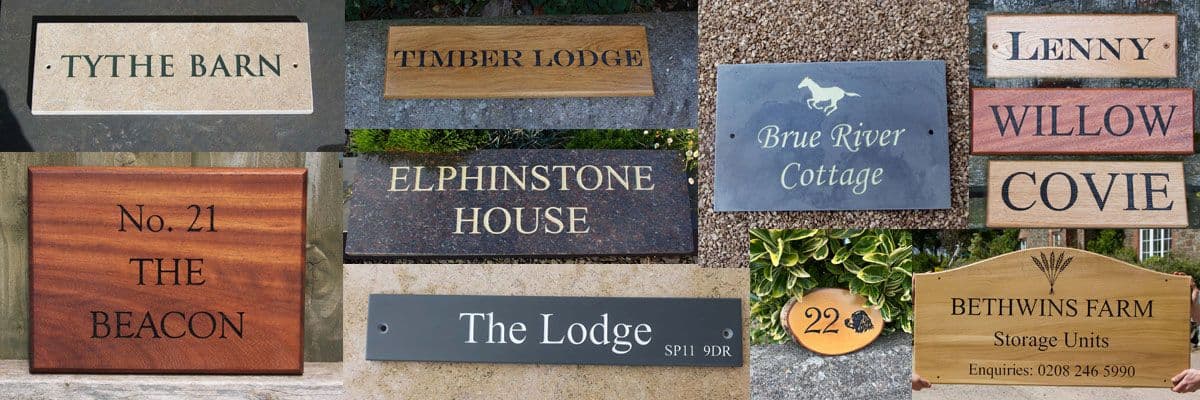
Slate is an incredibly versatile option. Its natural texture works beautifully with both traditional and contemporary properties, while engraved lettering creates a crisp and elegant finish.
Granite offers excellent durability and is available in a variety of natural colours and patterns. Depending on the particular granite chosen, it can create anything from a very traditional appearance to a striking modern sign.
Limestone provides a softer, more understated appearance. Its warmer tones work particularly well with cottages, period properties and rural surroundings.
However, the important thing to remember with any natural stone is that variation should be expected.
Colours, markings, veining, fossils, flecks and texture can vary from one piece to another. Rather than being imperfections, these are part of what makes natural stone so special.
If you want every sign to look completely identical, a manufactured material may therefore be a better option.
Natural Timber – Oak and Iroko
Wood is another wonderful choice if you want a sign that feels traditional, warm and full of character.
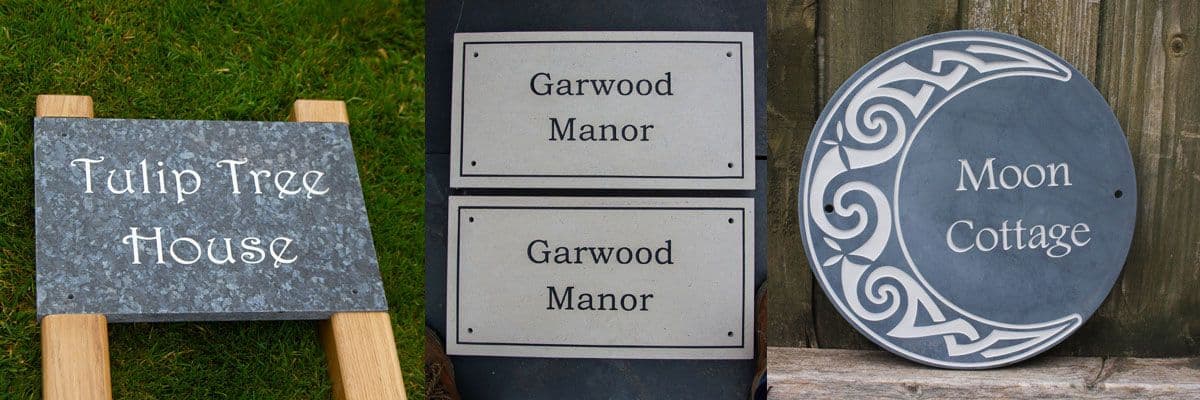
Oak is particularly popular for house signs, entrance signs and traditional business signage. Its distinctive grain develops beautifully over time and works particularly well in rural settings.
Iroko is naturally very oily and exceptionally well suited to outdoor signage. It has a rich colour when treated and is a fantastic option for everything from house signs to wooden memorial plaques.
Unlike many manufactured materials, however, timber will naturally change as it ages. Wooden signs also require some maintenance if you want them to continue looking their best. This might involve re-oiling or re-varnishing depending on the timber and finish.
For many people, that natural ageing process is part of the appeal. For others who want something requiring very little ongoing attention, a man-made material may be preferable.
What About Man-Made Materials?
Modern manufactured materials have opened up a huge number of possibilities within sign making.
Rather than simply trying to imitate natural materials, many offer properties and design opportunities that wouldn't otherwise be possible.
Some of our most popular options include:
- Corian
- Clear acrylic
- Aluminium Composite
- PaperStone
Corian – Modern, Versatile and Beautifully Precise
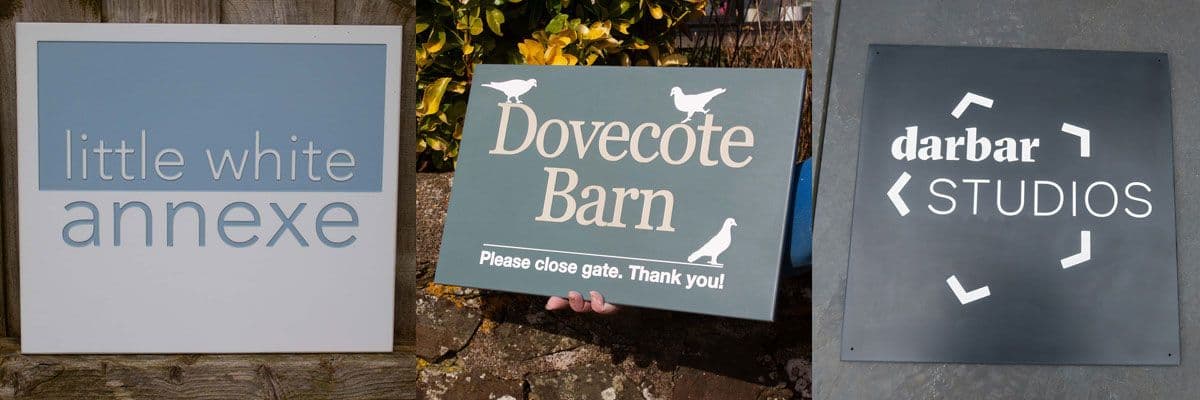
Corian has become an increasingly popular material for signs and plaques.
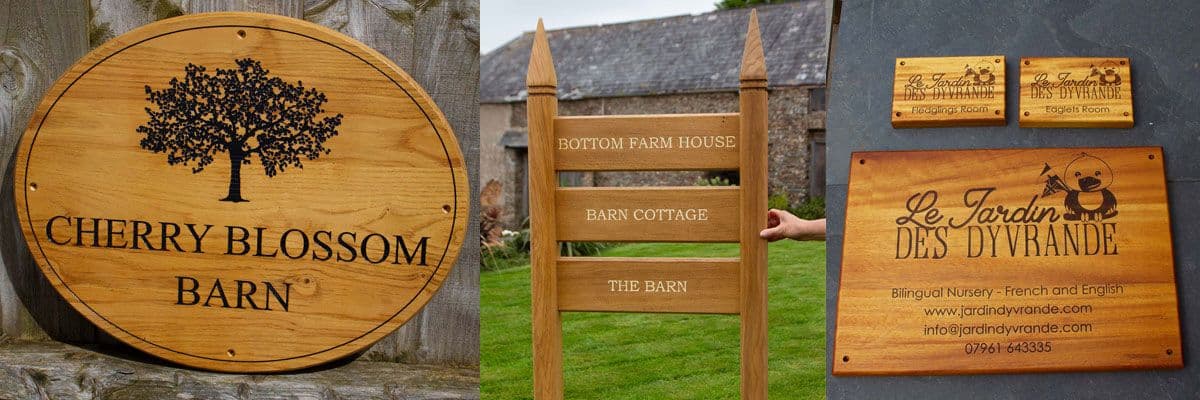
One of its biggest advantages is versatility. It is available in a fantastic range of colours and finishes, including options that can provide a stone-like appearance while offering the consistency of a manufactured material.
Corian can also be engraved with very fine detail, making it particularly useful for intricate designs, detailed logos and plaques containing larger amounts of wording.
Unlike natural stone, where every piece will have its own markings and variations, Corian provides a much more predictable and consistent finish.
This can be particularly useful for businesses requiring several matching signs or anyone looking for a very specific colour or contemporary appearance.
Clear Acrylic – When You Want Something Completely Different
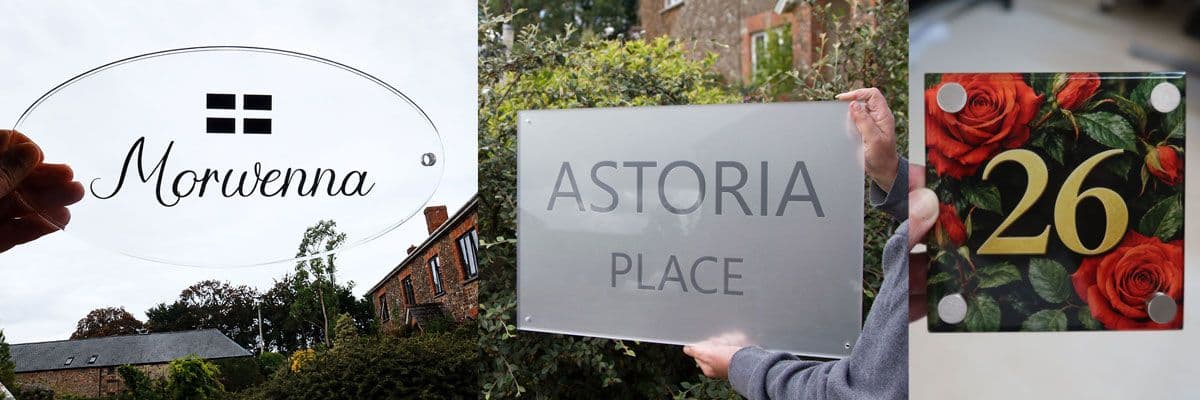
Clear acrylic offers an appearance that simply isn't possible with natural materials.
Its clean, almost floating appearance makes it particularly effective for contemporary house signs, office signs and modern business signage.
Depending on the design and fitting method, acrylic can create a very minimal look where the lettering and graphics become the main focus.
It is a great example of why choosing a man-made material doesn't necessarily mean compromising on character – it simply provides a completely different style.
Aluminium Composite – Practical and Versatile
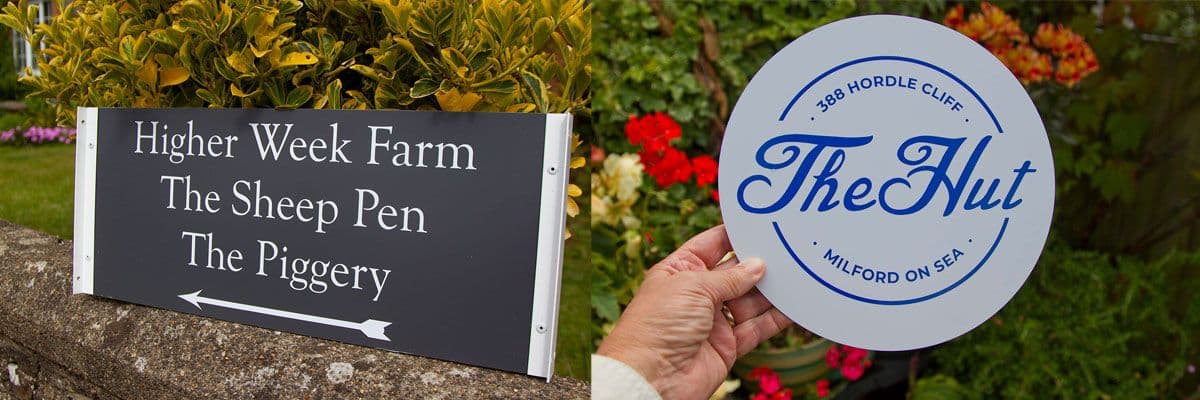
Aluminium Composite is an extremely useful sign-making material, particularly when larger signs or printed designs are required.
It consists of a lightweight core with aluminium outer layers, creating a panel that is strong without being unnecessarily heavy.
It is particularly suited to business signs, information signs, directional signage and designs incorporating printed graphics or branding.
Where carving or engraving natural stone might restrict the amount or type of information that can practically be included, Aluminium Composite gives considerably more freedom for photographs, logos, colours and detailed graphics.
It can also be a very cost-effective option, particularly for larger signage.
PaperStone – A Modern Material with an Interesting Story
PaperStone is another manufactured material, but perhaps not in the way you might initially imagine.
It is produced using layers of recycled paper combined with resin to create an extremely dense and durable material.
The result is a contemporary material with an attractive, tactile finish that can work particularly well for plaques and signage.
For customers looking beyond traditional stone, timber or plastics, PaperStone offers something a little different.
Natural Doesn't Automatically Mean Better – and Neither Does Man-Made
It can be tempting to assume that natural materials are automatically the premium choice, while manufactured materials are simply alternatives designed to imitate them.
In reality, it isn't that simple.
A beautifully engraved piece of slate might be perfect outside a traditional cottage, but it may not be the best material for a colourful information panel containing photographs.
Equally, Aluminium Composite might be ideal for a large branded business sign, but wouldn't provide the same warmth and character as a carved oak entrance sign.
The material should work with the purpose of the sign.
Character vs Consistency
This is perhaps one of the biggest differences between natural and manufactured materials.
With natural materials, you are embracing variation.
A piece of granite might contain an unexpected vein or fleck. Slate can vary slightly in texture and shade. Timber grain will never follow exactly the same pattern twice.
That individuality is precisely why many people choose them.
Manufactured materials generally provide much greater consistency. If you are ordering several plaques for different locations, for example, it may be easier to achieve a closely matched appearance using Corian or Aluminium Composite.
Neither is necessarily better – they simply create different results.
Traditional vs Contemporary
The architecture and surroundings of your property can also help guide your decision.
Natural oak, slate and limestone can look wonderful against stone walls, cottages, farmhouses and traditional buildings.
Corian, acrylic and Aluminium Composite can work particularly well with modern homes, commercial buildings and contemporary architecture.
But there are no strict rules.
Combining a traditional design with a modern material – or a contemporary design with natural stone – can create some particularly interesting results.
Think About the Design Too
Before choosing your material, consider what actually needs to appear on your sign.
A simple house name gives you an enormous amount of freedom.
A detailed business sign containing a logo, several colours and additional information may require a different approach.
Consider:
How much wording is there?
Some materials and engraving methods are better suited to very fine text than others.
Do you need colour?
If accurately reproducing brand colours is important, a printed manufactured material may offer more flexibility.
Do you want photographs or detailed graphics?
Printed sign materials can reproduce detail that wouldn't be practical to carve into timber or stone.
Do you want something completely unique?
Natural materials provide variations and markings that can never be exactly replicated.
How much maintenance are you prepared to do?
Some materials require more ongoing care than others, particularly natural timber.
So, Which Should You Choose?
If you love natural variation, texture and traditional craftsmanship, slate, granite, limestone, oak or iroko could be the perfect choice.
If consistency, detailed designs, contemporary styling or specific colours are more important, Corian, acrylic, Aluminium Composite or PaperStone may be more suitable.
And sometimes the best sign combines the two.
A modern sign panel can be paired with a beautiful timber frame, for example, bringing together the consistency and design flexibility of a manufactured material with the warmth of natural wood.
Ultimately, choosing a sign isn't about deciding whether natural or man-made materials are "better".
It's about choosing the material that works best for your property, your design and the way you want the finished sign to look.
At The Sign Maker, we work with a huge range of both natural and manufactured materials, allowing every sign to be made to suit the individual customer rather than restricting designs to one particular type of material.
Whether you love the individual markings of natural stone, the warmth of timber or the clean precision of a modern manufactured material, your sign can be designed your way.